I Who Have Never Known Men by Jacqueline Harpman
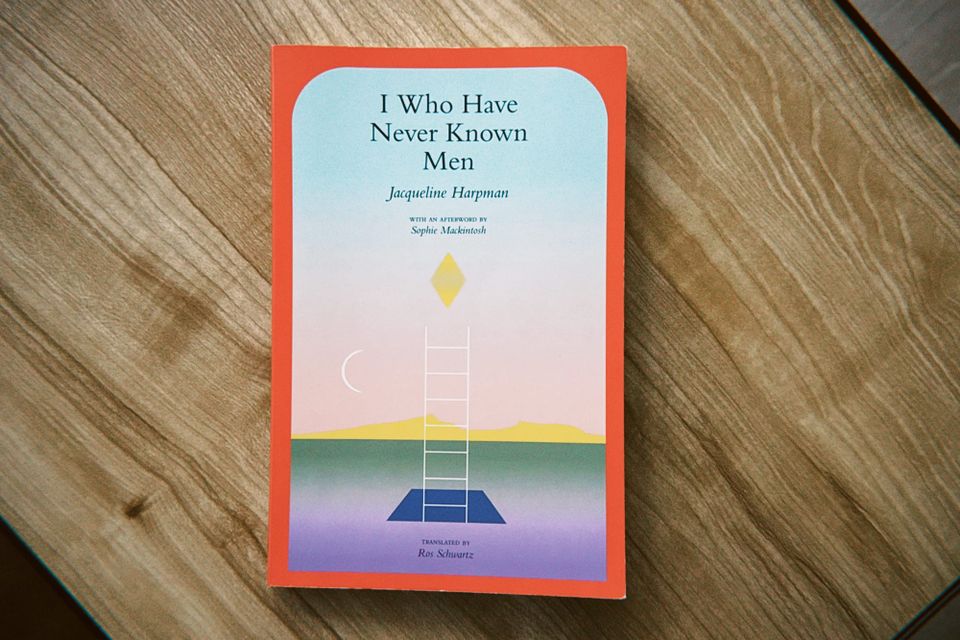
My friend read this book last year, during my no-buy season for books. She told me she thought I would love it. I kept seeing it in bookstores, picking it up, putting it back down. In January, at a team dinner, I was gifted this book. It felt meant to be. It has no chapters, which makes perfect sense. It’s the kind of book that refuses interruption. You don’t want to put it down. You just keep going.
I knew it would deal with difficult things. How could a story about women imprisoned in cages not be difficult? It made me think about a lot, about knowledge, about memory, about what it means to live without context. The story is told through the eyes of the youngest prisoner, a child who has never known the world before the cages. Unlike the women, she has no memories to mourn, no past to compare the present to. She grows up entirely within confinement.

I kept wondering what the child's name would have been. She wants to know everything. She wants knowledge even if she will never experience what she learns about. The women, on the other hand, sometimes believe it is futile, why teach her about a world she may never inhabit? At first, the child thinks the women are so irritating. Later she realizes they are coping. That realization felt painfully realistic. Even when she begins to understand them, she cannot fully relate to their grief or nostalgia, because she has never had what they have lost.
The women rarely speak about their children from before. To name them would be to imagine them dead, or worse, imprisoned somewhere similar. I kept wondering whether this shaped how they saw the child among them. Did she remind them too much of what they had lost? Was caring for her a comfort, or a wound reopened daily?
The child longs to experience menstruation because it is something everyone else has known. It is different. It is something. I remembered being in middle school when the teachers separated us into boys and girls. A very shy, newly graduated biology teacher talked to us about periods, blushing the entire time. The child never has this moment. She longs for it because it would interrupt the monotony.
I also thought about Harry Harlow’s monkey experiments. Infant monkeys clung to soft surrogate mothers even when they provided no food. The child grew up without that anchor of maternal touch. Physical contact is rare and often accompanied by the crack of a whip. Proximity signals danger. She learns early that closeness is not comfort but threat. It is perhaps unsurprising that she never becomes fully comfortable with touch. The only time she allows it is when she aids the women in dying, when she lets them caress her face as they slip away.

I felt so much excitement when they escaped the bunker and the same desperation when they discovered the first bunker filled with bodies. Escape feels, for a brief moment, like the return of time. I thought the child can stop counting time with her heartbeat and a different future might finally unfold for them. But the world they emerge into is eerily empty and suspended. Hope appears, then dissolves. And what is more devastating than hope proven useless?
The book made me think about what I take for granted. Seasons change. Days accumulate. I just take this continuity for granted. I complain about the weather, about minor inconveniences. In a time of friction-maxing, when thrifting becomes trendy and we seek analog experiences for aesthetic pleasure, what immense privilege it is to choose discomfort.
In school, I learned that humans are defined by walking upright, by tool-making, by language. But this book really makes me think about humanity. What actually makes us human and makes us who we are? Who are we without shared memories and communities?

I finished the book on a plane, clouds outside the window, suspended between cities, between time zones. What would the child think if she could see this? She who has never known men. She who has never known cities, seasons, or crowds. Would she feel wonder? Would she finally feel less alone?
Comments ()